
Before You Sign: The Car Title Mistakes That Delay a Donation
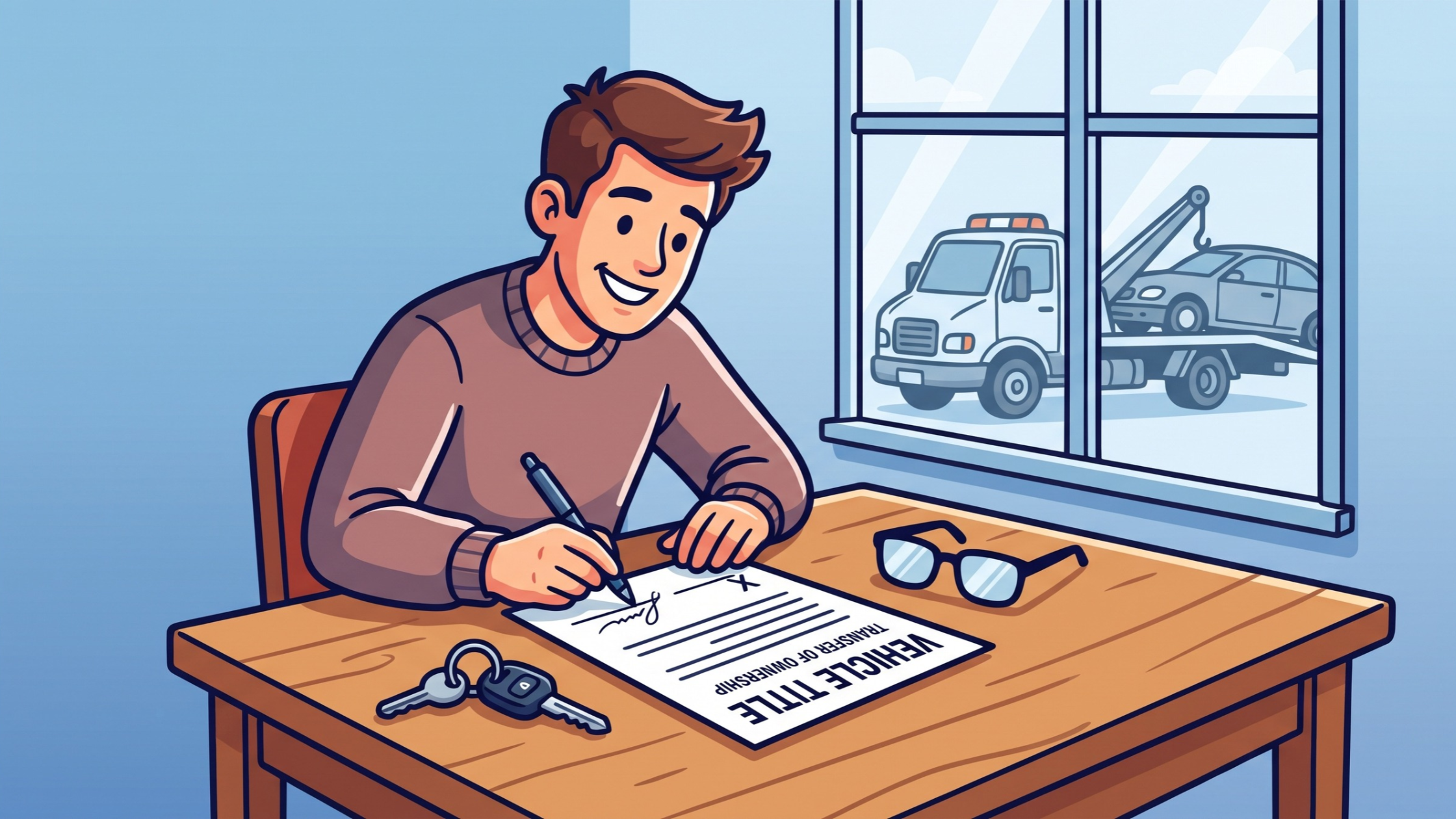
The title is the one document that proves you own the car, and one wrong mark can void it. Every state’s title looks different and deciphering each field can be overwhelming for first-time car donors. Field names, where you sign, and even whether you need a notary all change at the state line. We’re covering the universal rules, the state differences that trip people up most, and where to find a step-by-step video for your state.
The Universal Rules (They Apply in Every State)
From north to south, Atlantic to Pacific, these rules apply to all vehicle titles:
- Use blue or black ballpoint ink. Some states print it right on the title (West Virginia, South Carolina‘s “dark ink”). Skip pencil, marker, and gel pen as using these can void your title.
- Never correct a mistake. Nearly every title we reviewed says some version of “any alteration or erasure voids this title.” No white-out, no crossing out, no writing over. Call our team before you try to fix anything.
- Match the name on the front exactly. Your signature and printed name should match the owner line, middle initial and suffix included.
- Know the difference between printing and signing. Most states ask for both, in separate fields. Mixing them up is one of the most common errors.
- Leave the buyer and dealer sections alone. Reassignment blocks, purchaser applications, and buyer signatures belong to someone else.
Find Your Transfer Section (Front or Back?)
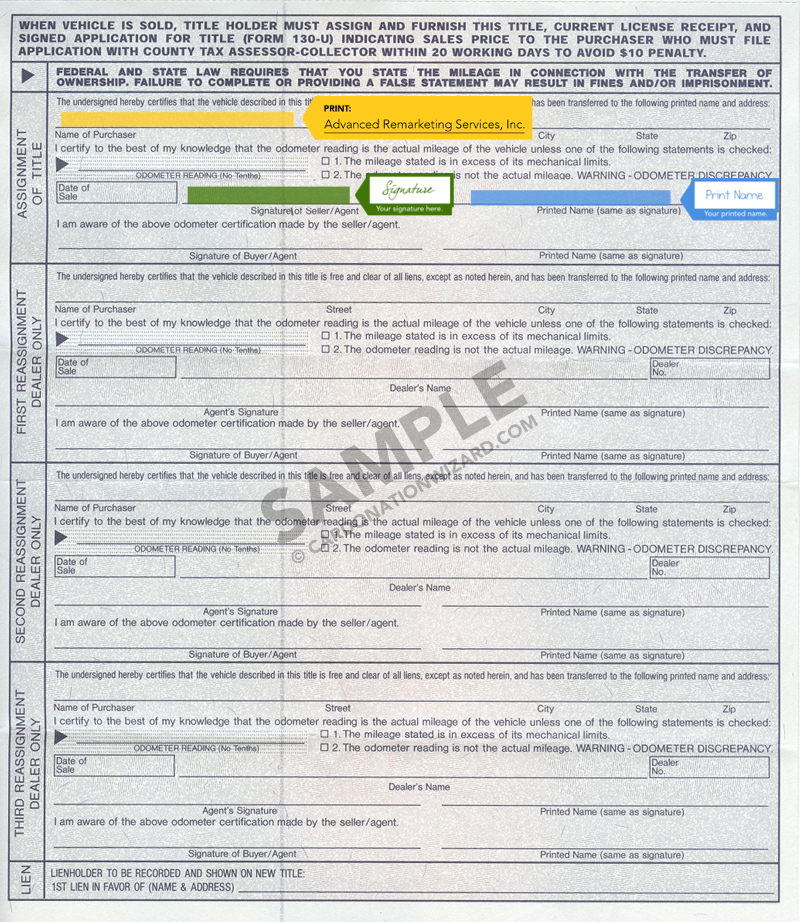
This is the section on your title where you’ll be filling out your information as the seller. In many states, the transfer section is on the back (California, Pennsylvania, Tennessee, Utah, and many more).
In other states, it’s on the front, and the back sections are reserved for dealers only. Examples: Illinois, Virginia, Wisconsin, and the most current Washington title format. Texas splits their transfer sections: one signature is on the front of the title, and one is on the back.
Our recommendation? Look for headings like “Assignment of Title,” “Transfer by Owner,” or “Assignment of Ownership.” Those are clear indicators that you’re looking at the transfer section of your title.
Does Your State Require a Notary?
Most states don’t, but a handful do, and signing before you’re in front of a notary can force you to start over and have to apply for a duplicate.
These states require signature notarizations on their titles:
Hawaii’s notary signatures are optional, but always double-check with your local DMV, Revenue Office, or Title Clerk to confirm if notarization is required for your title transfer.
Watch the order of operations when you’re notarizing your title. Some states, such as Pennsylvania, won’t notarize until the buyer’s name is filled in. When in doubt, leave the field blank until you are in front of the notary and have them confirm what they need to witness versus what you can fill in on your own before getting their seal and signature.
*Pennsylvania allows an authorized agent to verify instead of a notary, and Wyoming allows the county clerk to witness the signature.
Older Titles, Lost Titles, and States Without Titles
Our title help pages and videos include example title images for you to reference. However, many states have redesigned their titles over the years. If yours doesn’t match an online example, the field names may be different, not wrong. We highly recommend doing a quick online visit to your local title clerk website (don’t trust AI summaries, as they can provide outdated information) to see if they have examples you can reference.
If you’ve lost your title, most states offer a duplicate or substitute that you can apply for. For example, Washington offer’s an Affidavit in Lieu of Title that requires a notary signature but can be used if your Washington state title has been lost or destroyed.
Some states, such as Vermont, may not title older vehicles at all and allow owners to use their current registration. Check with your local title clerk to learn about your state’s rules.
Who’s the Buyer if You’re Donating Your Car?
When you aren’t actually selling the car, it can be tricky knowing whose name to print in the Buyer field of your title. Sometimes it’s the organization you’re donating to, and sometimes it’s the agency the organization is using to process the vehicle donations. The safest bet is to leave those fields blank until your donation team instructs you otherwise.
If you’re donating your vehicle to one of the charities featured on the Car Donation Wizard website, our title experts will give you explicit instructions for who to print as the buyer. You can call our team if you have any questions: 1-877-957-2277.

Turning Vehicles Into the Ultimate CARE Packages
The CARE Package has been a symbol of hope for over 80 years. Today, that legacy of compassion continues through your driveway. Donating a vehicle to CARE transforms an unused asset into a powerful resource for global change, providing the essential funding needed to empower women, fight poverty, and respond to the world’s most urgent humanitarian crises.

2006 Land Rover Range Rover Donated to The American Cancer Society
Take a look at this month’s vehicle donation shout-out, a 2006 Land Rover Range Rover. This vehicle was generously donated to the American Cancer Society through the Cars for a Cure Vehicle Donation Program. Donating your car to ACS rather than just selling it will...

Small Keys, Big Impact: Supporting Healthy Moms and Strong Babies
Every baby deserves the best possible start, but today’s maternal health crisis means too many families face the challenges of preterm birth and maternity care deserts. Donating a vehicle to March of Dimes transforms an old car or truck into a powerful engine for change, providing the critical funding needed for lifesaving research, mobile health clinics, and advocacy that protects moms and babies across the country.

Building Communities with Cars for Homes™
Building a decent place to live starts with a strong foundation, and sometimes that foundation is built one car at a time. By donating a vehicle to the Habitat for Humanity Cars for Homes™ program, supporters transform unused cars and trucks into the materials, labor, and hope needed to build affordable housing for families in their own local communities.

Beyond Borders: How Your Vehicle Donation Fuels Emergency Medical Aid
When a global crisis strikes, every second counts. Donating a vehicle to Doctors Without Borders/Médecins Sans Frontières (MSF) provides the critical, unrestricted funding that allows medical teams to deploy within hours to the world’s most volatile regions. By turning an unused car or truck into a donation, supporters help provide lifesaving care to those caught in conflict, disease outbreaks, and natural disasters.

Supporting Your Local Public Radio Station with the Car Talk Vehicle Donation Program
Supporting public radio often starts with a driveway discovery: that old car you’ve been meaning to fix (but never will). Donating your vehicle to the Car Talk Vehicle Donation Program transforms an unused “heap” into a powerful resource, providing the critical funding that keeps independent journalism, storytelling, and “Click and Clack” laughs on the air for millions of listeners.

2009 Mazda 5 Donated to Habitat for Humanity
This week's car donation is a 2009 Mazda 5 donated to Twin Cities HFH through their Cars for Homes Program. Cars for Homes makes it easy for you to donate your car to a good cause. By donating your vehicle to Habitat, you can help build and repair affordable homes...

Fueling the Path to Recovery: How Vehicle Donations Support Shatterproof’s Mission
An unused vehicle can become a catalyst for recovery. Learn how vehicle donations provide the resources Shatterproof needs to revolutionize the addiction crisis in America.

From Your Driveway to Their Table: Support Feeding America
Supporting the fight against hunger often starts with a meal, but ending it for good requires a nationwide movement. Donating a car to Feeding America transforms an unused vehicle into a powerful resource, providing flexible funding that helps put food on tables and hope in hearts for millions of families across the country.

Donate a Car to Special Olympics Rhode Island and Help Athletes Thrive Year-Round
Support inclusion, courage, and community by donating a car to Special Olympics Rhode Island. Your vehicle donation helps provide year-round sports training and athletic competition—free of charge—to more than 4,000 children and adults with intellectual disabilities across the state.